
ARCHAEOLOGICAL SITES
Umbria offers a rich archaeological heritage, highlighting the Etruscan and Roman civilizations.
-
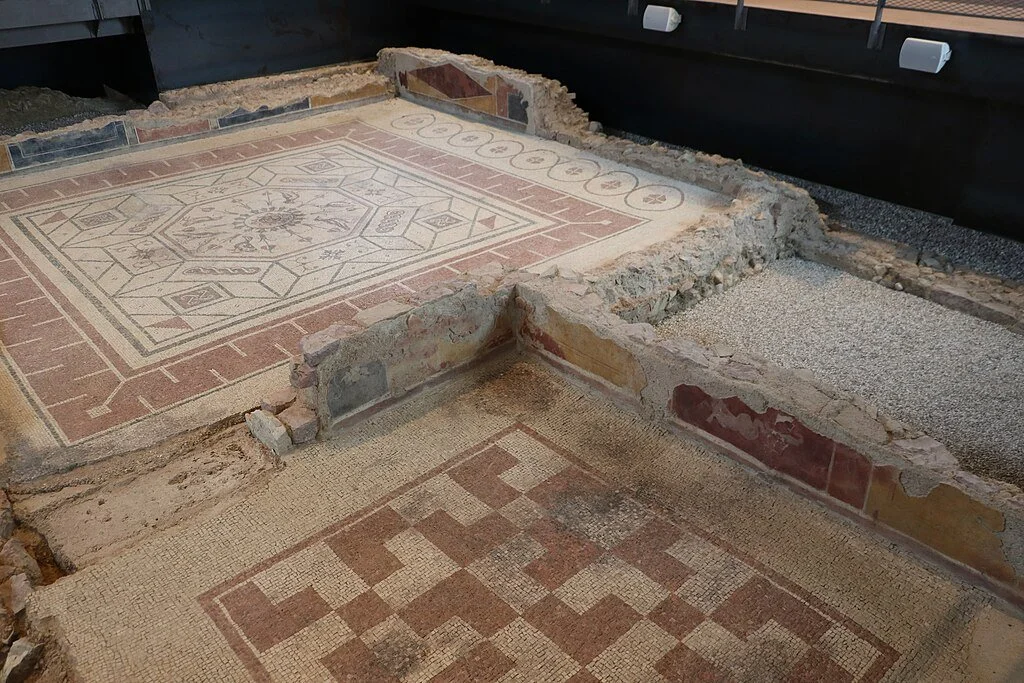
Villa of the Mosaics, Spello
The Villa of the Mosaics of Spello was discovered in July 2005, just outside the walls of Spello, in the locality of Sant'Anna. The remains of an ancient mosaic emerged from the earth, which gave way to the excavation operations and, subsequently, to the meticulous restoration operations conducted with the scientific direction of the then Archaeological Superintendence of Umbria, bringing to light a large villa. It’s one of the most important archaeological discoveries that has taken place in recent years in Umbria. Ten rooms with mosaic floors of great beauty, with extraordinary polychrome decorations: geometric elements, human figures, wild and fantastic animals.
-
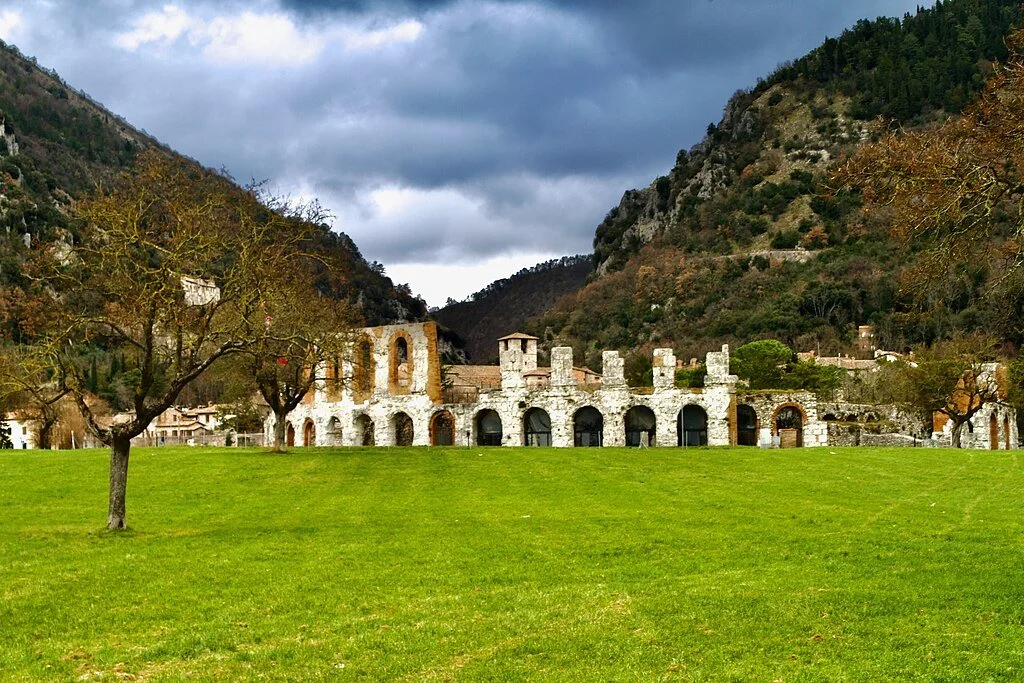
Roman Theatre and Antiquarium of Gubbio
The Roman theater, whose construction began in the first century BC, was completed between 55 and 20 BC.Originally, the theatre had two orders of arches, of which the lower arch and a section of the upper one remain, embellished with large limestone blocks in opus quadrata with rustic ashlar. The cavea, which could accommodate an audience of over six thousand people – therefore higher than the theater of Pompeii, which welcomed about five thousand – is divided into four sections. Access was from the corridors below, without radial steps and therefore probably connected to the cavea by wooden stairs.
-
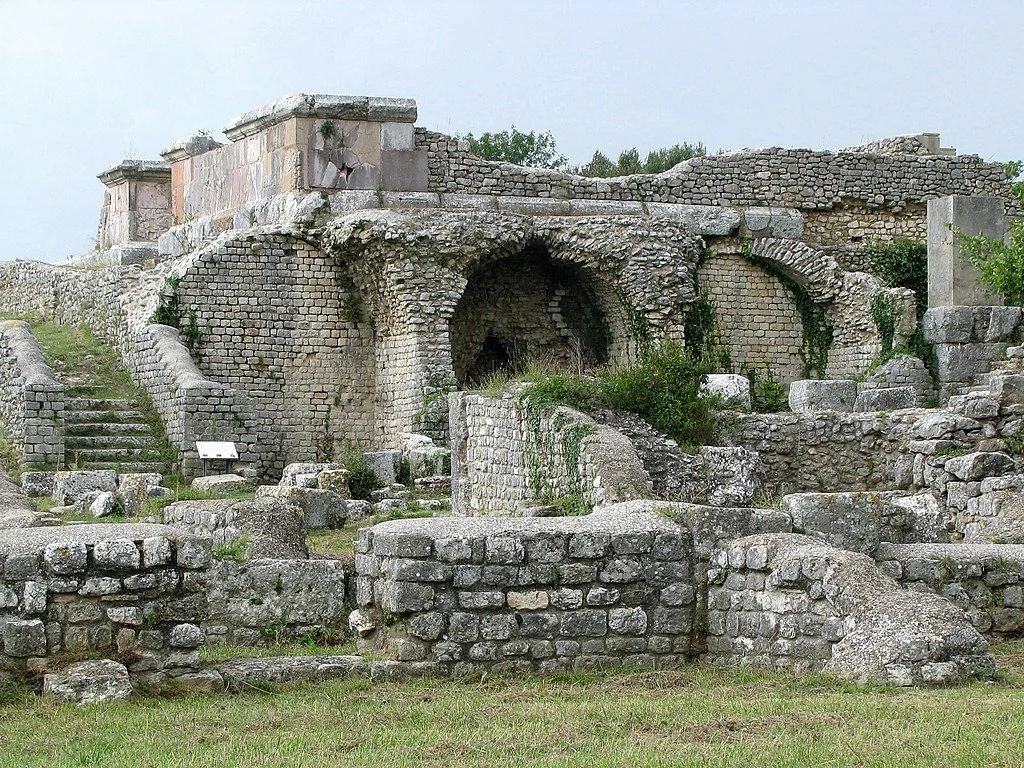
Archeological Area of Carsulae
It’s the first Italian site to be included on the UNESCO World Heritage List in 1979. The name 'Massi di Cemmo' refers to the two large blocks that fell from the rock face, following a landslide, with engravings as old as the Copper Age and made by the ancient inhabitants of the Camonica Valley. These two imposing sandstone blocks are placed 15 metres apart and are flanked by other large stones. All these findings suggest the existence of a megalithic sanctuary, whose sacred space was bordered by walls and marked by ornate stelae.
-
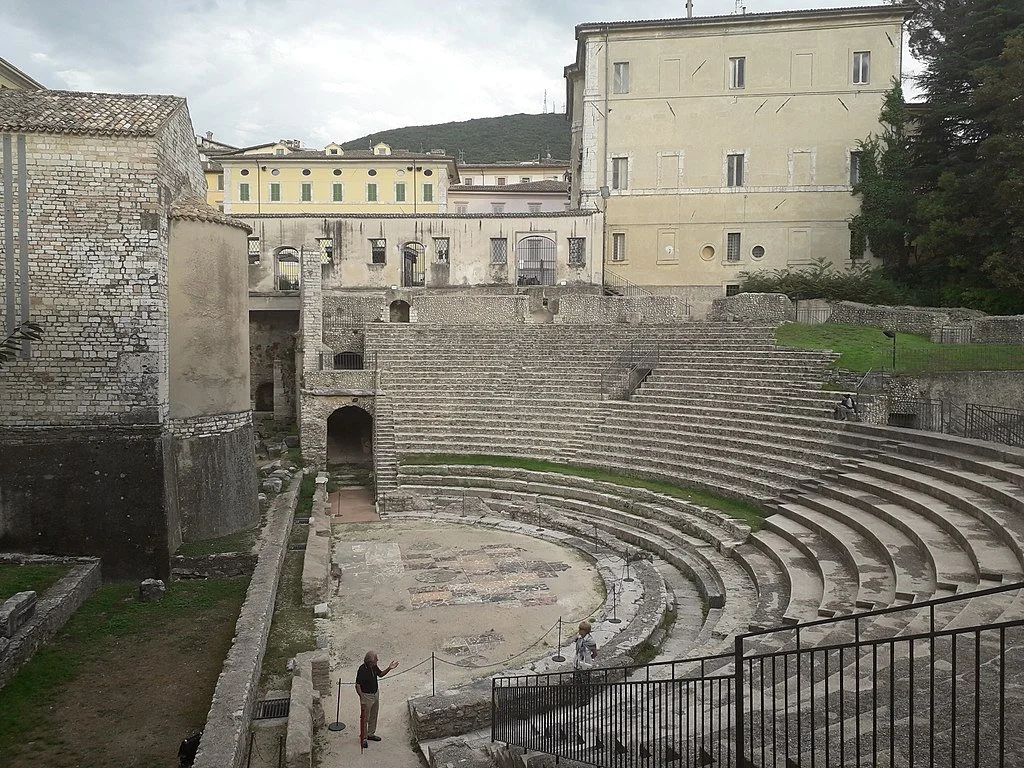
Roman Theather of Spoleto
The Roman Theatre was built in the second half of the first century BC, immediately inside the city walls, and remained in use until the fourth century. During the Early Middle Ages, the church of S. Agata and the palace of the Corvi family were built on the scene. In 1395, the Benedictine nuns settled in Palazzo Corvi, and the theater, now buried, became the cloister of the monastery. Today, the Theatre is part of the complex that houses the State Archaeological Museum and is still used for shows and various representations.
-
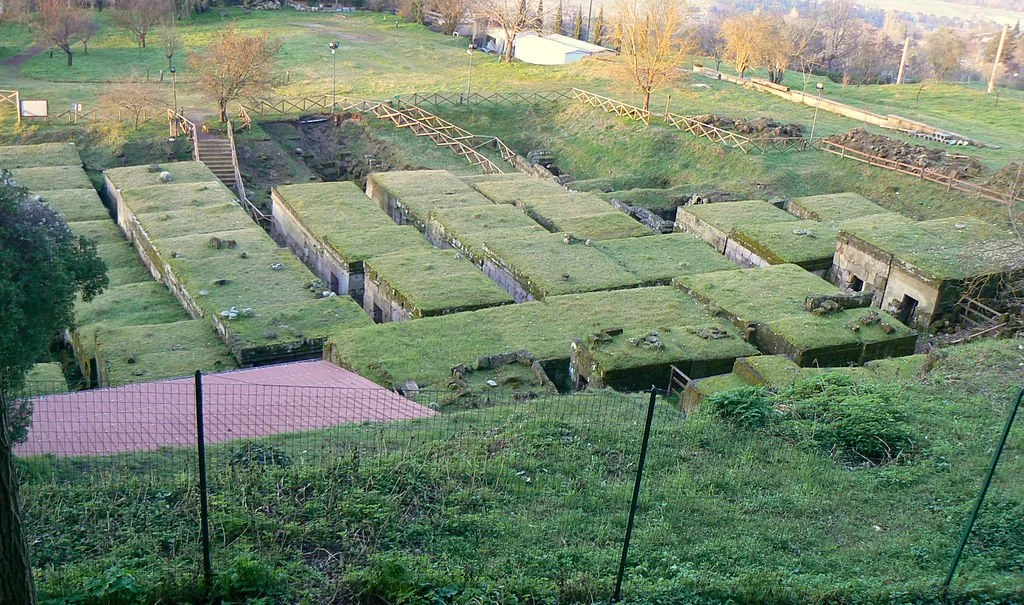
Etruscan Necropolis , Orvieto
At the foot of the majestic tuff cliff crowned by Orvieto, lies one of the most fascinating necropolises in Italy, the Crocifisso del Tufo, an Etruscan chamber tomb. In fact, here, between the 6th and 3rd centuries BCE, a cosmopolitan community buried their dead in a true city of the dead. The result is an eternal neighbourhood, where each family had its own otherworldly home, topped by an inscription that still whispers the name of its owner.
-
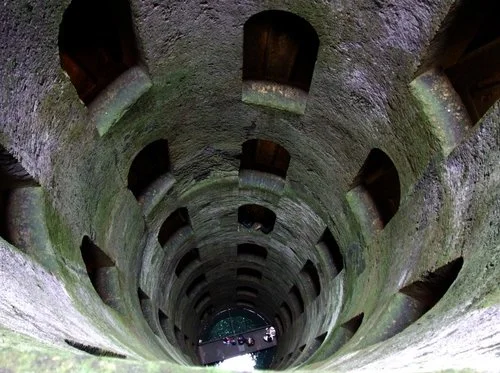
Well of San Patrizio, Orvieto
In the center of Orvieto, near the gardens with Etruscan remains, is the well of St. Patrick, the second city attraction after the Duomo. St. Patrick's Well was built in the sixteenth century to guarantee water to the town. It seems that the name Pozzo di San Patrizio dates back to the nineteenth century, when the friars of the church of the Servites linked it to the legend of the Irish St. Patrick. It is said that the Saint prayed in a huge, almost endless cavity and that this was connected to the gates of Purgatory from which Paradise could be glimpsed.