
MUSEUM SITES
Museums in the Marche region offer a rich journey through art, archaeology, and history, with the prestigious National Gallery of the Marche in Urbino and the State Fortress of Gradara as spearheads
-
![Photo by [Luca Fantini] — [• Unsplash]](https://images.squarespace-cdn.com/content/v1/6249e81f18357d21cff3ee57/1773764488013-MIGATE3FZ9R2DDL7YNN9/unsplash-image-PlLXi6klTjc.jpg)
The National Gallery of the Marche
Home to the Ducal Palace of Urbino, a true fortified citadel where in the 1400s Federico da Montefeltro brought together many of the greatest artists and intellectuals of the Renaissance art which houses the National Gallery of Marche and the Museo Archeologico Lapidario. The palace and its decorations thus contribute, together with the works on display, to drawing a picture of the best artistic production between the Middle Ages and the Renaissance. The collections, set up on the main floor of the palace, include the house museum of the famous painter Raphael, the neoclassical Cathedral, the frescoes of the Oratory of San Giovanni, and the sculpture of the Nativity in the Oratory of San Giuseppe.
-
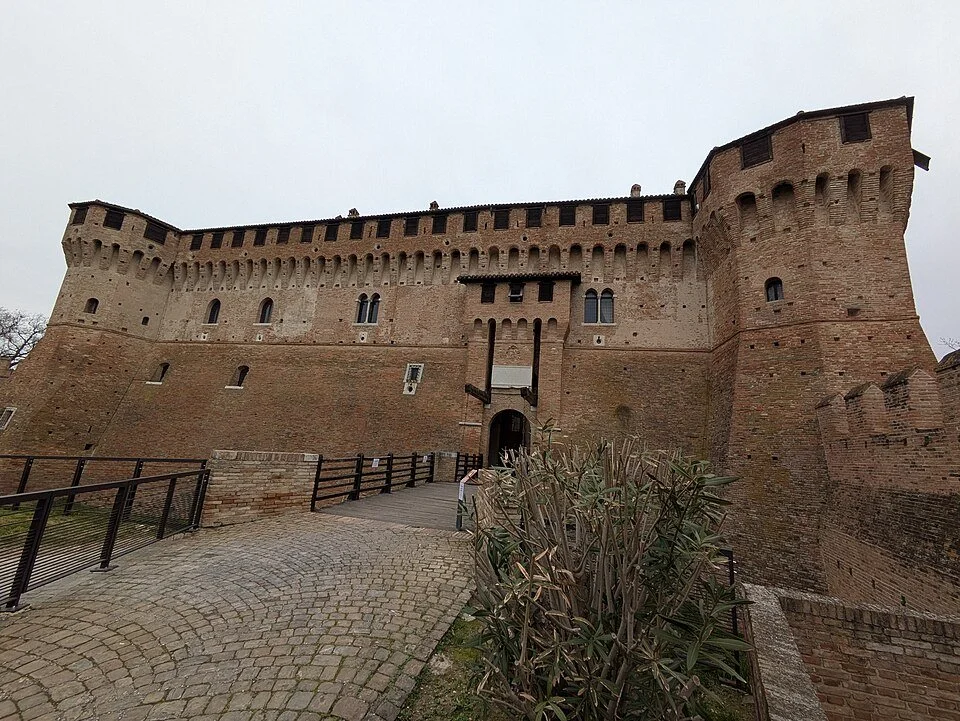
The Rocca of Gradara
It represents one of the best-preserved Italian Medieval structures, its set of two surrounding city walls that protect the Rocca, also making it one of the most aesthetically-imposing. The Castello or Fortress stands on a hill at 466 ft above sea level, while its mastio or main tower rises an even further 98 feet, keeping watch over the entire valley. Gradara’s privileged position has meant its importance as a crossroads of peoples and trade since ancient times: during the Middle Ages, the fortress was one of the predominant theatres of battle between the Pontifical militias and the ruling dynasties of the Marches and Romagna regions. The castle was built by the powerful De Griffo Family around the year 1150; however, it was the Malatestas that constructed the Fortress and pair of fortification walls between the 13th and 14th Centuries, thus lending to Gradara its aspect as viewed today.
-
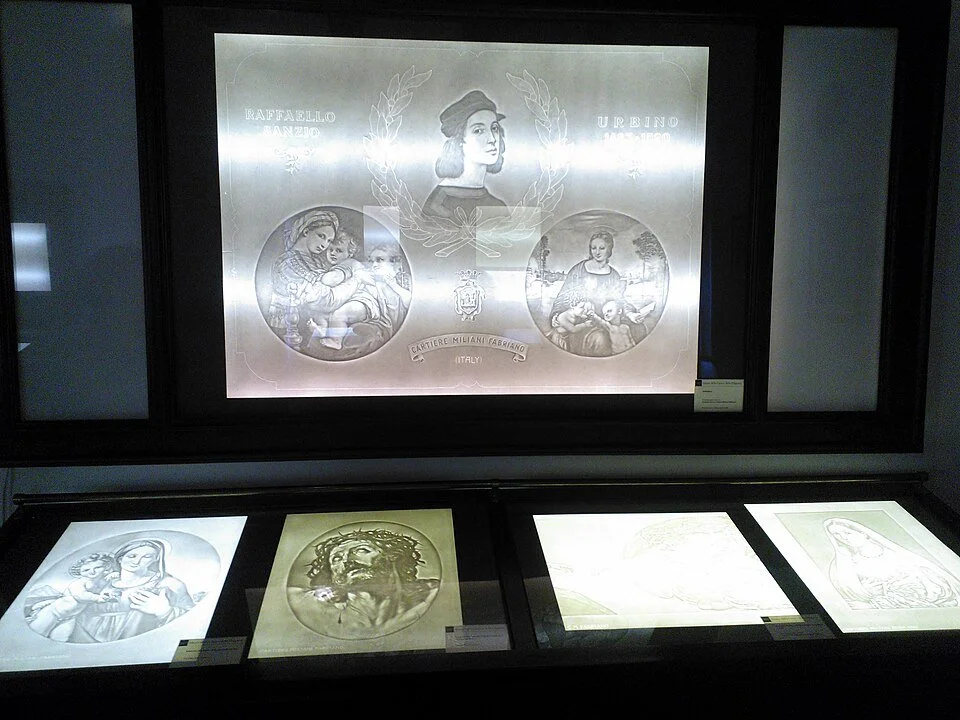
Paper and Watermark Museum
In the heart of Fabriano, inside the ancient Dominican Convent, there is the Museum of Paper and Watermark, a place that tells with passion and precision over seven hundred years of paper tradition. One of the most fascinating sections in this Museum is the one dedicated to watermarking, a refined technique that allows you to insert drawings and symbols inside the sheets, making them unique and recognizable. The museum exhibits historical and contemporary examples, illustrating the methods of realization and their use in the artistic and documentary fields. The museum experience is enriched by live demonstrations conducted by master papermakers, who show the use of traditional tools and involve the public in interactive workshops, where it is possible to create a personalized sheet of paper.
-
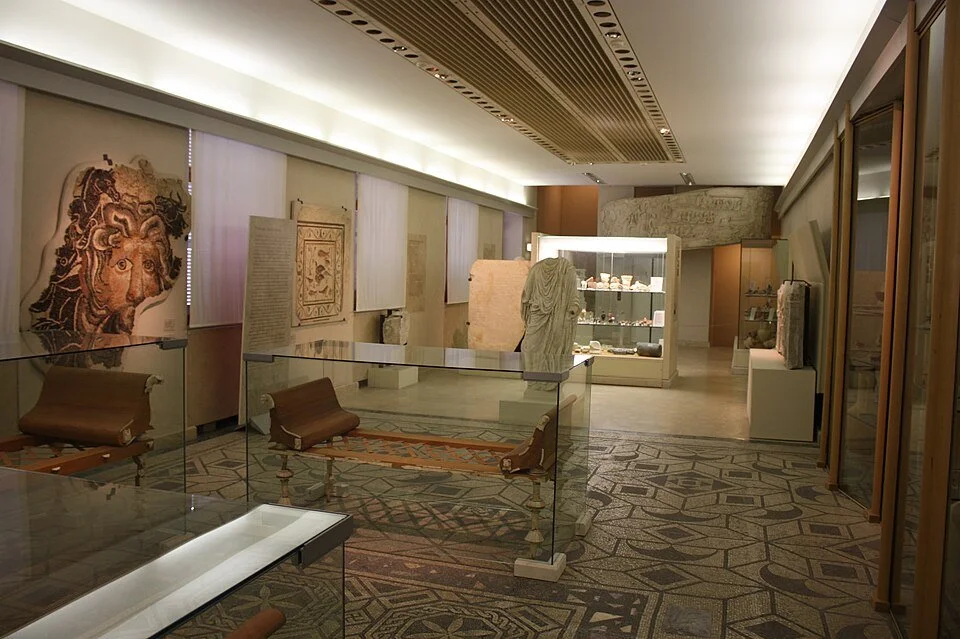
National Archeological Museum of the Marche
In the heart of Ancona, the refined Palazzo Ferretti is the National Archaeological Museum of the Marche, one of the most important institutions in the Italian archaeological scene. The palace that houses it, dating back to the sixteenth century, is a remarkable example of Renaissance architecture, embellished with pictorial decorations by Pellegrino Tibaldi, finely worked ceilings, and a terrace that offers a suggestive view of the city port. The visit starts through the ages, from Prehistory to the Bronze Age, where you can admire the extraordinary Venus of Frasassi, a female statuette that dates back to about 28,000 years ago. A distinctive feature of the museum is the fact that its collections do not come from noble legacies but are the result of over a century and a half of excavations and archaeological research conducted in the Marche region.
-
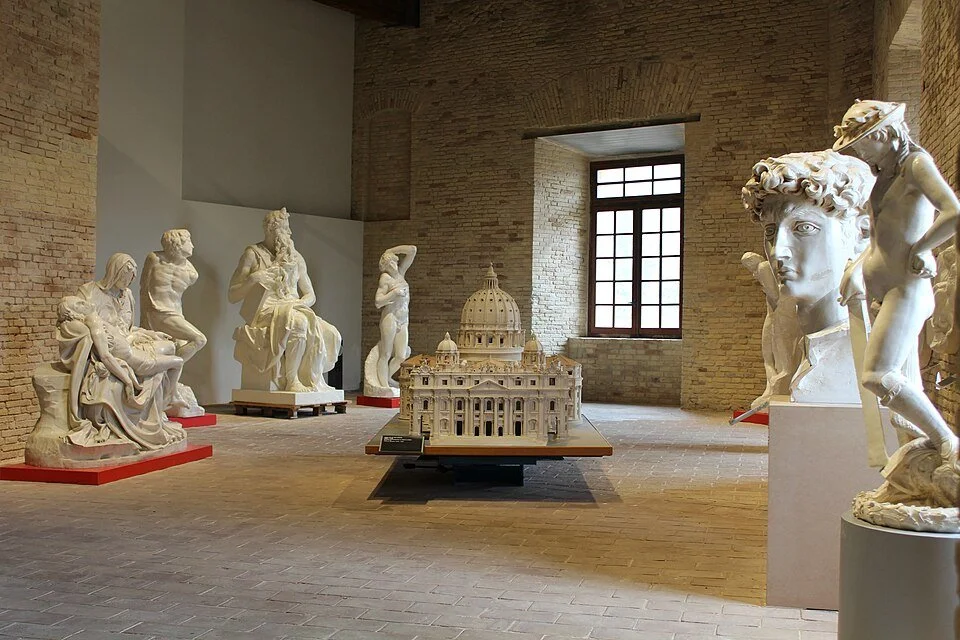
Museo Tattile Statale Omero
The Museo Tattile Statale Omero, a truly unique museum, was created with the intention of making art accessible to everyone, especially those with visual disabilities. Founded in 1993 thanks to the initiative of Aldo Grassini and Daniela Bottegoni, both blind, the museum has revolutionized the way of experiencing art, transforming touch into a privileged tool for exploring beauty. Among the best-known reproductions are the Venus de Milo, the Parthenon, the Capitoline She-Wolf, the Pantheon, and the model of Piazza dei Miracoli. two hundred works through an immersive sensory experience. The collections include plaster and resin reproductions of famous works of antiquity, architectural models, modern sculptures, and design objects. Among the best-known reproductions are the Venus de Milo, the Parthenon, the Capitoline She-Wolf, the Pantheon, and the model of Piazza dei Miracoli. Internationally recognized as a model of cultural accessibility, the Museo Omero continues to be a point of reference for those who believe in inclusive, sensory, and participatory art.
-
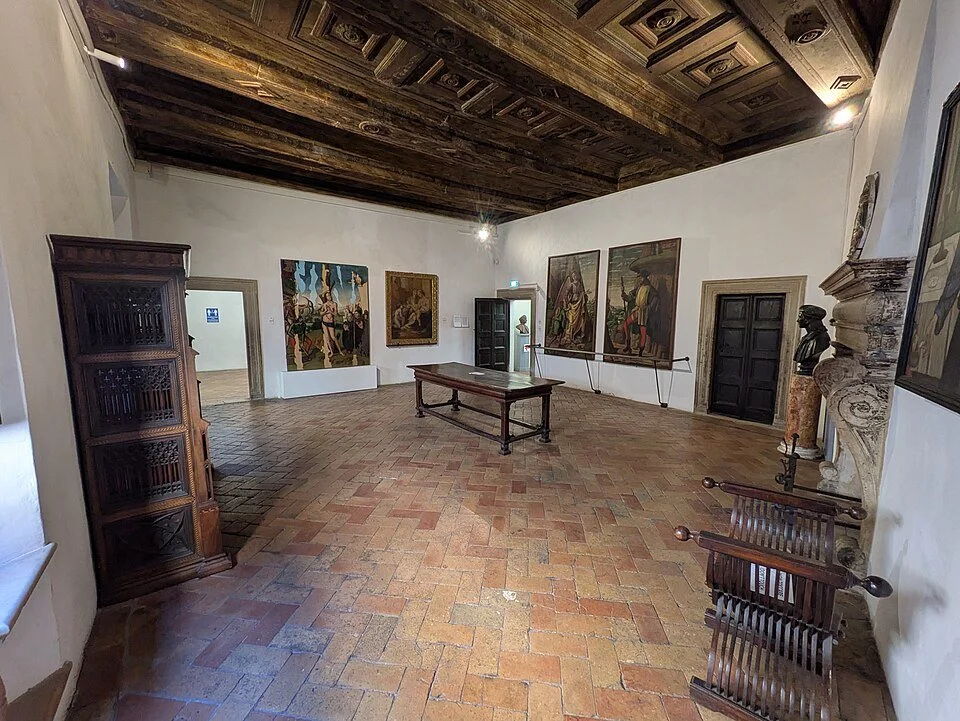
Raphael's House
In Urbino, in the house where the great artist Raphael was born, on 28 March 1483, and spent his first years of artistic training, you can explore the Casa Natale di Raffaello museum. A large first-floor room with a coffered ceiling is home to the Annunciation by Giovanni Santi, alongside 19th-century copies of Raphael’s Madonna of the Chair and Ezekiel’s Vision. In an adjoining room, believed to be the room where the painter was born, is a fresco of the Madonna and Child. Of particular interest are a drawing attributed to Bramante and a collection of Renaissance ceramics. The upper floor houses manuscripts, rare editions, coins, and commemorative 19th-century portraits.