
UMBRIA
![Umbria — [Photo by:Sterling Lanier} — [• Unsplash]](https://images.squarespace-cdn.com/content/v1/6249e81f18357d21cff3ee57/1772464463638-FIENLRSQ0V0N2NM6KQ5N/Umbria)
Umbria is the Green Heart of Italy. Majestic peaks draped in lush forests and vast valleys shaped by rivers, lakes, and waterfalls. Rolling hills crowned with ancient villages and castles, crossed by trails rich in history, art, and culture.
A region with the highest number of medieval villages in Italy and fortresses that have resisted over the centuries, such as the imposing Rocca Paolina, commissioned by Pope Paul III to symbolize power.
Perugia, the Capital, is a place of culture par excellence. The city is home to a very prestigious University founded in 1308.
Gubbio, known as the city of stone, has always fascinated illustrious travelers and writers with its beauty, its history, and its traditions.
Orvieto is a jewel perched on a tuff cliff with an imposing cathedral and the suggestive Pozzo di San Patrizio.
Assisi is a unique example of a sanctuary city recognized as a UNESCO World Heritage Site for the Basilica of San Francesco and other sites linked to the figure of the saint, such as the Church of Santa Chiara and the Cathedral of San Rufino.
Spoleto is dominated by the majestic Rocca Albornoziana, built at the end of the 1300s, perched at the top of Sant’Elia Hill, overlooking the surrounding countryside.
![Marmore Falls — [Photo by:Stefano Zocca ] — [• Unsplash]](https://images.squarespace-cdn.com/content/v1/6249e81f18357d21cff3ee57/1772465189697-PH72WB75ZPI3WZU3LS8G/unsplash-image-ccg8Ezj-aK0.jpg)
Galleria Vittorio Emanuele — [Photo by: Federico Di Dio] — [• Unsplash]
About Umbria
Umbria is the only region of peninsular Italy not to be bathed by the sea, but its territory is very rich in water. The Marmore Falls are a magical place where the Velino River meets the Nera, and the Lake Piediluco, where you can spend a few hours relaxing or doing sports on its shores.
The largest lake in the region is Lake Trasimeno, surrounded by delightful villages such as Castiglione del Lago and Passignano on Trasimeno. The quiet and characteristic medieval village of Città della Pieve is home to the narrowest alley in Italy and preserves some of the most important masterpieces by the Renaissance painter Pietro Vannucci, known as Perugino, between the Cathedral and the Oratory of Santa Maria dei Bianchi.
Things To Do
A must-visit is Assisi, a unique example of a sanctuary city recognized as a UNESCO World Heritage Site for the Basilica of San Francesco. The church of Santa Maria Maddalena, the Rocca del Leone, and the adjoining Palazzo Corgna are just some of the architectural wonders that make Castiglione del Lago one of the most beautiful villages in Italy.The artistic, environmental, and cultural heritage of the small urban center of Etruscan origin, which has welcomed illustrious guests, from Leonardo da Vinci to Niccolò Machiavelli. The Marmore Falls are a magical place where the Velino River meets the Nera. La Scarzuola is a surreal and eccentric construction that is the result of the creative genius Tomaso Buzzi, who decided to build his own ideal city by mixing elements of the past with those of the present and the future. The Cave of Monte Cucco will take you down into the bowels of the mountain in a suggestive underground path among stalactites and stalagmites, galleries, labyrinths, and tunnels. The Giostra of Quintana in Foligno is an evocative medieval historical re-enactment with an equestrian joust that attracts thousands of curious people every year in mid-June.
In Città della Pieve in August, there is the Palio dei Terzieri, an archery competition in which you have to hit mobile bull-shaped silhouettes mounted on a carousel that increases in speed turn after turn.
July is the month of music with Umbria Jazz, the most important Italian jazz music festival that has taken place every year in Perugia since 1973. Perugia, in October, also hosts Eurochocolate, the international chocolate festival that transforms the city into a paradise for gourmands.
![Assisi [Photo by: Sara Bertoni] — [• Unsplash]](https://images.squarespace-cdn.com/content/v1/6249e81f18357d21cff3ee57/1772468122816-ISYR0SV0AHZY0ZD49P2X/unsplash-image-H-a4MBjsjXk.jpg)
Maggiore Lake [Photo by: Claudio Schwarz] — [• Unsplash]
Cities To Visit
-
Perugia, the Umbrian capital, stands on a hill in the Tiber valley and is a famous city of art, as well as an effervescent cultural center. It has the appearance of a fortified medieval village, within a mighty wall. It boasts top-notch museums, beautiful nature surrounding it. The historic centre is a true 14th-century village, one of the most beautiful and beloved in Italy. It boasts a very intense city life thanks to the two historic universities – the University of Perugia founded in 1308 and the University for Foreigners, the oldest of its kind in Italy.
-
The city of San Francesco has a thousand-year history with important Roman, medieval and Renaissance testimonies.Built with the typical “pink stone” of Mount Subasio on which it rests, the city of Saint Francis boasts a millenary history with important Roman, medieval, and Renaissance remains. The Basilica of Saint Francis, with its cycle of frescoes depicting the saint’s life painted by Giotto, has left a profound mark on art and spirituality in Italy and throughout the world. His figure has inspired an entire culture and works admired all over the world. The Basilica was built for Francis which, together with the church and convent of Santa Chiara, has significantly changed the urban iconography.
-
Also known as the "city of stone", Gubbio fascinates the visitor with its beauty, history and traditions. A tour of the suggestive Gubbio can only start from the magnificent monumental complex of the Piazza Grande,also known as Piazza della Signoria, which connects the Public Palaces, once the seats of the two civil magistracies: the Palazzo dei Consoli, an imposing Gothic-style building completed around 1340, which today houses the Civic Museum and the unfinished Palazzo del Podestà, now the municipal residence. Then there is the Ducal Palace built on a design by Francesco di Giorgio Martini at the behest of Federico da Montefeltro. Also not to be missed are the six gates that open onto the city walls, built at the end of the thirteenth century and still well preserved.
-
An elegant medieval city, one of the most fascinating destinations in Umbria, Todi stands austere and melancholic on top of a hill overlooking the beautiful Tiber valley. In Piazza del Popolo, the ancient seat of the Roman forum, you can visit the main monuments of Todi: the Duomo, the Palazzo dei Priori, the Palazzo del Capitano and the Palazzo del Popolo; all symbols of a power that was.
-
Orvieto offers its visitors a rich historical, artistic, gastronomic and environmental heritage. Walking through the streets of the city means taking a journey through its three millennia of history: in every point you can find traces of past eras. The visit could start from the Duomo and then continue with the Rocca and the Pozzo di San Patrizio. Walking towards Corso Cavour, after a stop in one of the ancient shops, you will arrive in Piazza del Popolo where the Palazzo del Popolo and the Papal Palaces dominate in all their splendor. Between one monument and another, take a break in one of the characteristic trattorias to savor the typical products of this land. A marvel of Italian Gothic art, the Cathedral of Orvieto reveals an extraordinary harmony despite the fact that 20 different artists have worked there for more than 3 centuries.In the center there is the magnificent rose window and all around the mosaics, which despite being very beautiful, have very little of the original ones. The interior contains two chapels fundamental for religion and art: the Chapel of the Corporal and that of San Brizio.
-
Two kilometres of well-preserved walls bear witness to the ancient grandeur of the city, which still retains the medieval appearance given it by the Longobards, who raised it to the rank of capital of the duchy and embellished it with buildings, making it a genuine pearl of architecture.The city still reatains its excellent art, culture and architectural venues, all worth visiting, starting with the Albornoziana Fortress, overlooking the city and the valley, Santa Eufemia, the Roman Theatre or the majestic Bridge of Towers. Some also preserve interesting anecdotes, such as the cathedral frescoed by Fra' Filippo Lippi Spoleto is the setting for the Festival of the Two Worlds. For an entire fortnight, no one does anything in the city but watch plays, concerts and films in extraordinary locations, or stand in the streets to watch the buskers perform.
-
Spello is a charming village, with its ancient sandstone houses, narrow and winding alleys from medieval times, sudden panoramic glimpses of the surrounding hills and, more than any other place in the region, with well-preserved traces of the Roman the Augustan gates the remains of the amphitheater and the baths and the Villa of the Mosaics. Also worth a visit are the church of S. Maria Maggiore with the Baglioni chapel admirably frescoed by Pinturicchio, the church of S. Andrea of the thirteenth century and the collegiate church of S. Lorenzo. Is also famous for the infiorate, carpets of flower petals composed by real artists to celebrate Corpus Christi.
-
Terni is a city nestled in the heart of the peninsula, rich in artistic and scenic beauty. In addition to the Roman Amphitheater, which is still partly preserved, the Cathedral of Santa Maria Assunta, the Romanesque tower of the Barbarasa family and the Basilica of San Valentino, where the remains of the patron saint of lovers are preserved, are worth a visit.The oldest buildings are mixed with contemporary architecture such as the "Spear of Light", better known as Arnaldo Pomodoro's Obelisk. It is the modern symbol of the city and depicts the evolution of the art of smelting from the raw iron of the base to the tip that seems to be gold.
-
In the heart of the Sibillini Mountains National Park, Norcia is an ancient town founded by the Sabines. It derives its name from Northia, the Etruscan goddess of fate and fortune. Around 480, the holy siblings Benedict and Scolastica were born in this mountain town. Benedict founded the first monastic order of the Western world in 529, which, under the motto “ora et labora” (pray and work), spread quickly across Europe, becoming a key unifying force between distant and diverse regions, fostering unity through liturgical prayer, structured regulations, and culture.
-
Foligno was founded by the ancient Umbrians, followed by the Romans, who made it a municipium and an important post on the Flaminian Way. Later destroyed by barbarian invasions and subsequently rebuilt, it became an independent commune in the 11th century, but in about 1310 it came under the seigniory of the powerful Trinci family , under whose rule the town developed considerably. In the 15th century it became part of the Papal States, remaining under its rule (except for the brief Napoleonic period) until 1860, when it became part of Italy with the birth of the Italian State.
-
Founded by the ancient Umbrians, Città di Castello became a Roman municipium with the name Tifernum Tiberinum.Surrounded for long stretches by 16th-century walls, in Città di Castello the "breath of art" can be found in the enchanting atmosphere of the historic center, in the elegant Renaissance architecture, the courtyards and arcades of noble palaces, the cloisters and naves of churches; from the monumental Cathedral with its treasures, to Santa Maria Maggiore, Santa Maria delle Grazie, San Francesco, and San Domenico.
-
On a high hill overlooking Lake Trasimeno and the Val di Chiana, Città della Pieve is a town with an exquisitely medieval structure, all made of local brick, which has been produced here in excellent quality since the Middle Ages. A border town between the Papal States and the Grand Duchy of Tuscany, Città della Pieve has been able to exploit this strategic position to its advantage.
![Assisi [Photo by: Gary Walker-Jones] — [• Unsplash]](https://images.squarespace-cdn.com/content/v1/6249e81f18357d21cff3ee57/1772475500926-VL2G10BN01DWS0JBPRC7/unsplash-image-GV0gfaQNrno.jpg)
Assisi [Photo by: Gary Walker-Jones] — [• Unsplash]
![Citta' di Castello [Photo by: Maurice Van Dalfsen] — [• Unsplash]](https://images.squarespace-cdn.com/content/v1/6249e81f18357d21cff3ee57/1772475846809-TDTWILGOEDT1OTDWBYKB/unsplash-image-plEBMDiLJ4U.jpg)
Citta' di Castello [Photo by: Maurice Van Dalfsen] — [• Unsplash]
![Gubbio [Photo by: Riccardo Bernucci] — [• Unsplash]](https://images.squarespace-cdn.com/content/v1/6249e81f18357d21cff3ee57/1772475958507-MY5FJE52AT0RA4TW034Z/unsplash-image-H-cgXTucLdc.jpg)
Gubbio [Photo by: Riccardo Bernucci] — [• Unsplash]
![Norcia [Photo by: Riccardo Lamon] — [• Unsplash]](https://images.squarespace-cdn.com/content/v1/6249e81f18357d21cff3ee57/1772476872595-UP8XJHIYTN6IXY3ZJIYA/unsplash-image-x3PpeV2Yhds.jpg)
Norcia [Photo by: Riccardo Lamon] — [• Unsplash]
![Orvieto [Photo by: TS] — [• Unsplash]](https://images.squarespace-cdn.com/content/v1/6249e81f18357d21cff3ee57/1772476961362-ZF6T430IN5POVEJRSE65/unsplash-image-BrqGXDXs3y8.jpg)
Orvieto [Photo by: TS] — [• Unsplash]
![Perugia [Photo by: Gabriella Clare Marino] — [• Unsplash]](https://images.squarespace-cdn.com/content/v1/6249e81f18357d21cff3ee57/1772477046567-YTTAK1MS63TYWT0DTGHH/unsplash-image-sFJvb-TmhAk.jpg)
Perugia [Photo by: Gabriella Clare Marino] — [• Unsplash]
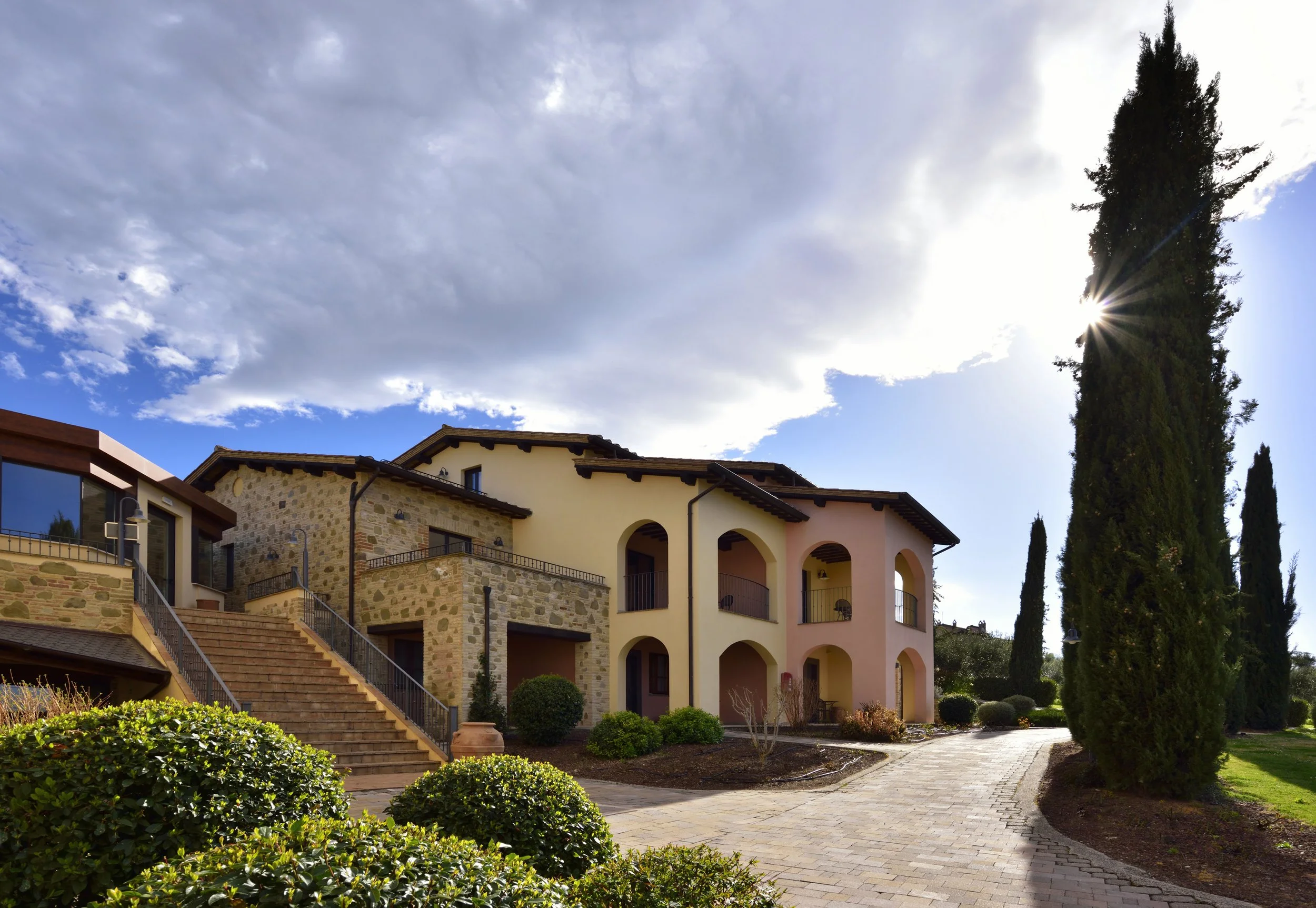
Borgobrufa Resort
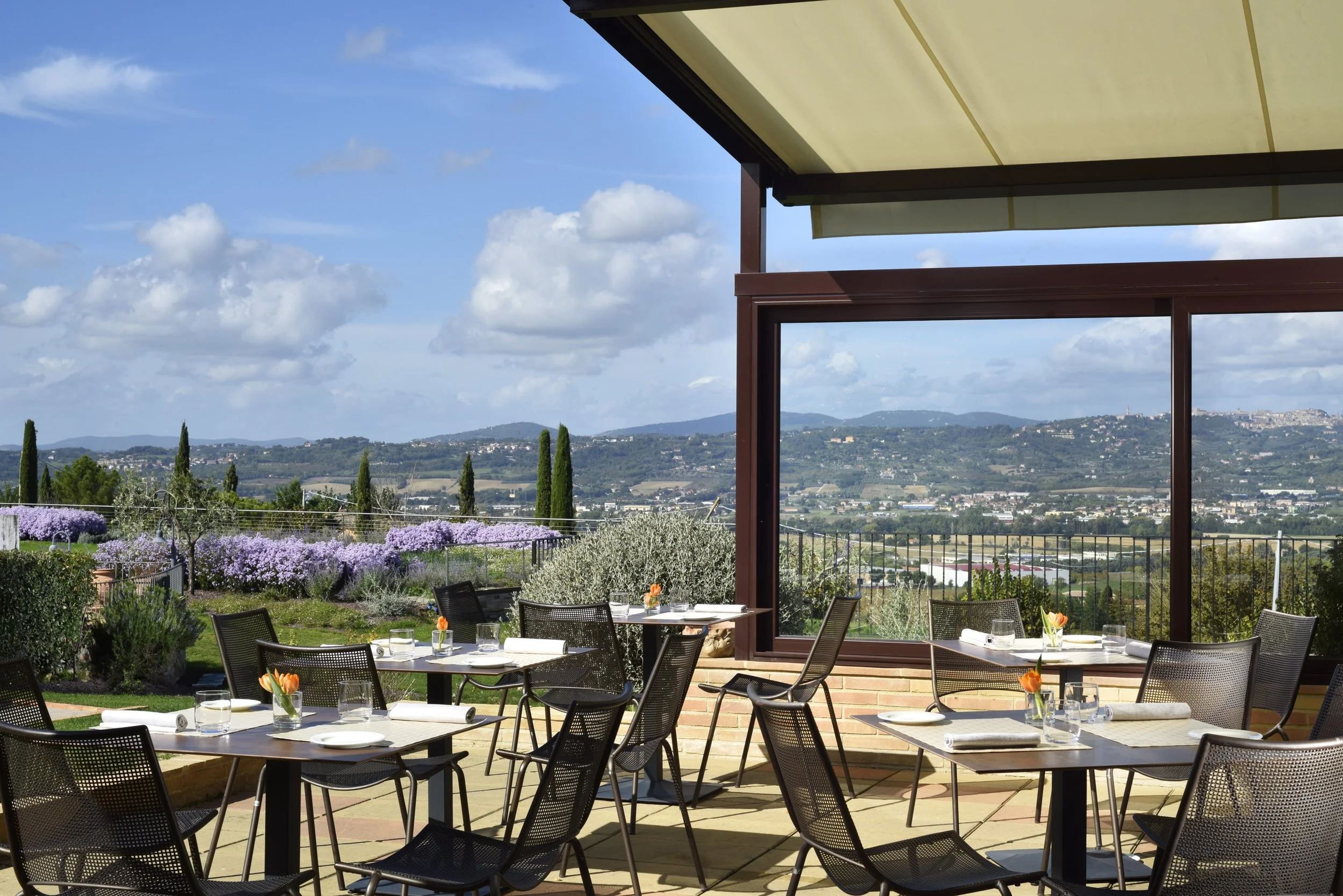
Borgobrufa Resort
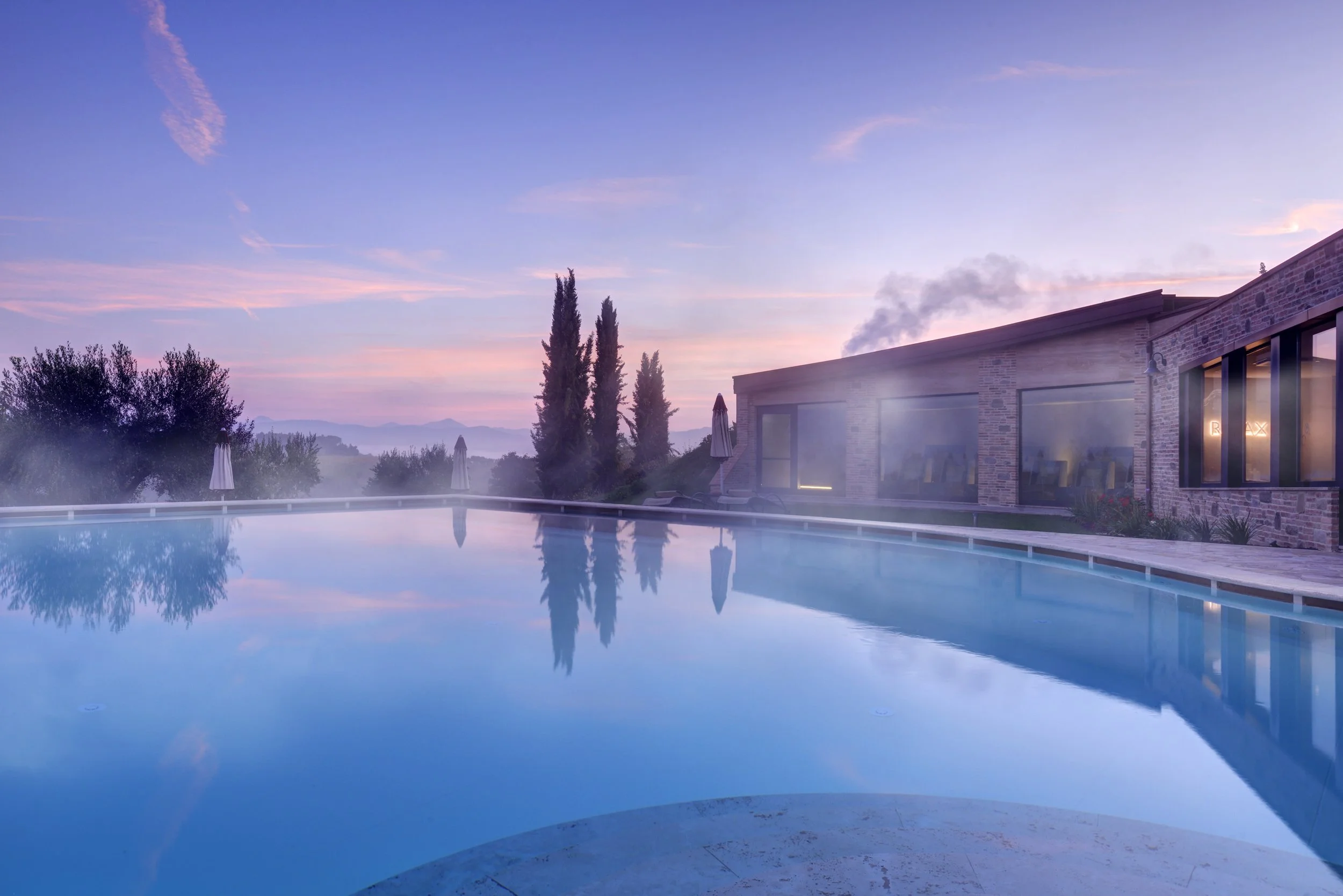
Borgobrufa Resort
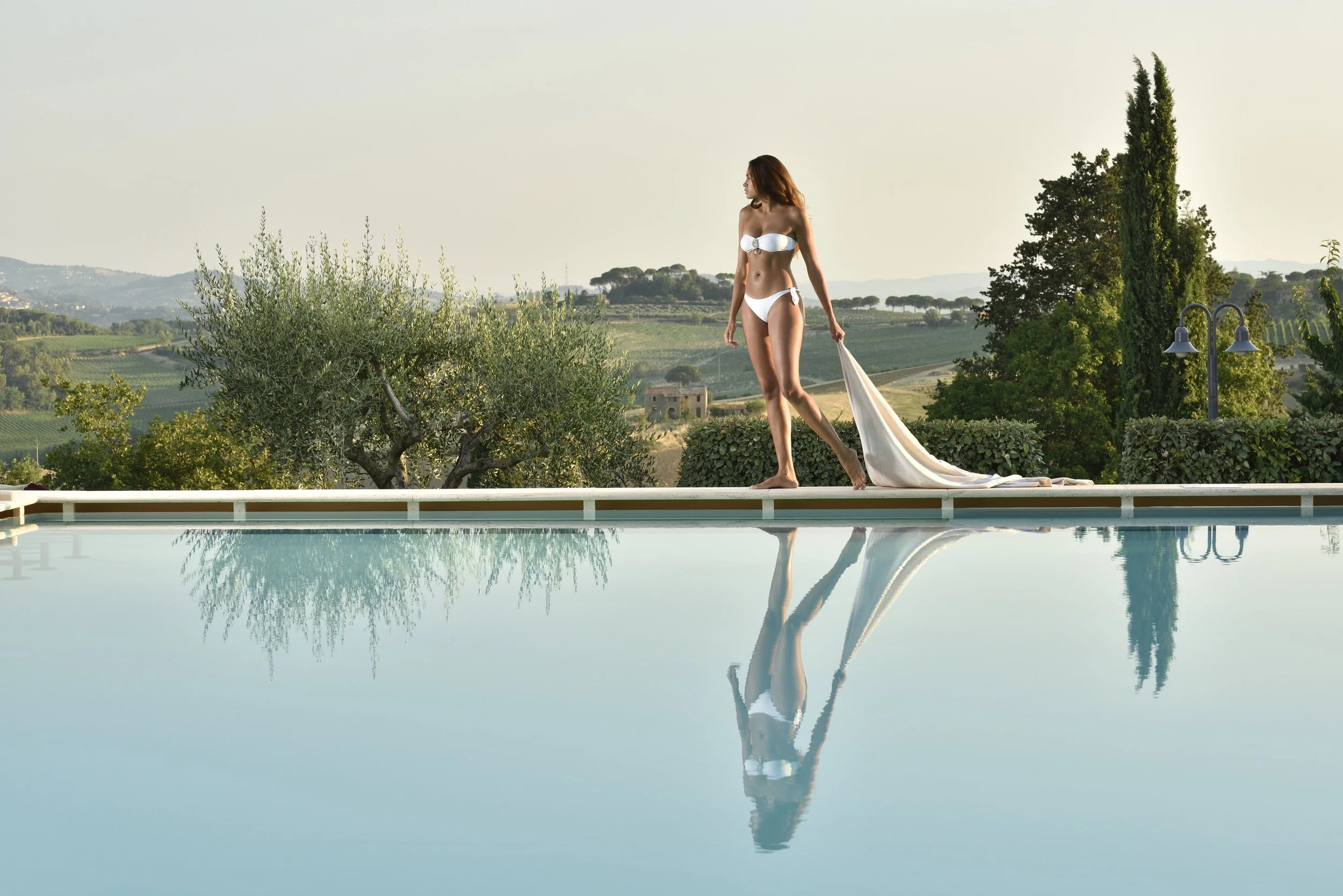
Borgobrufa Resort
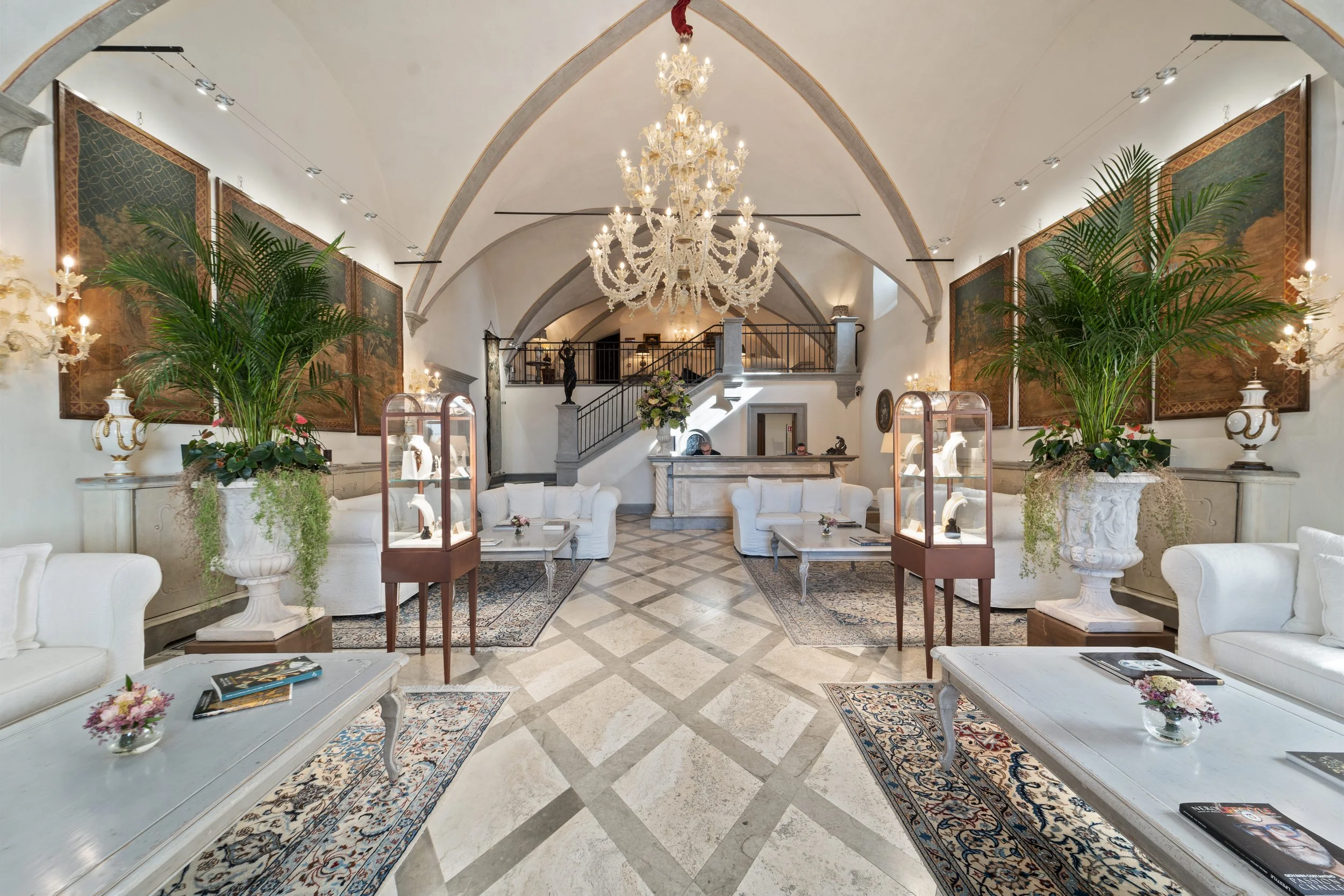
Monastero di Cortona
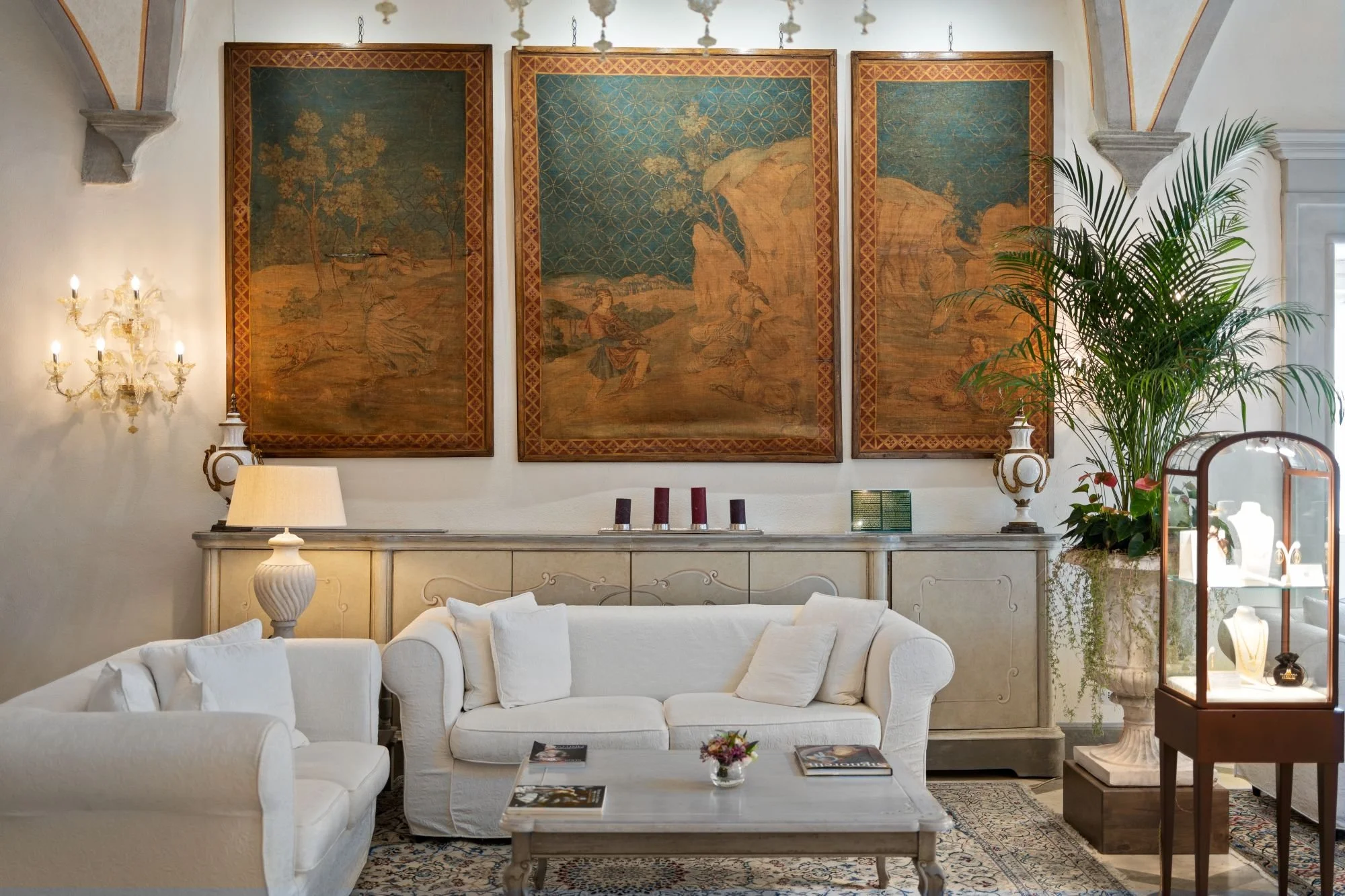
Monastero di Cortona
In Umbria, you can wander around fascinating villages, lose yourself and find yourself again along paths, visit iconic Christian sites, practise sports, or treat yourself to good food and relaxation. Umbria enchants around every corner, boasting the greatest number of medieval villages in Italy, with centuries-old fortresses, including the imposing Rocca Paolina, commissioned by Pope Paul III as a symbol of papal power over the ancient city of Perugia. The essence of Umbrian art pervades the Green Heart of Italy thanks to the works of great artists such as Perugino, Giotto, Cimabue, Nicola Pisano, Arnolfo di Cambio, who have left their unmistakable mark in various locations. From Città di Castello to Terni, from Orvieto to Assisi, passing through Gubbio, Perugia, or Spoleto: every corner of the region preserves the artistic testimony of its history, giving space to the most interesting forms of contemporary art.
-
Umbria has an extraordinary artistic and cultural heritage, including enchanting medieval villages and cities of art full of treasures. Assisi is where every corner tells the story of St. Francis. The saint who left an indelible mark not only in religion, but also in art and culture. The Basilica of St. Francis, a UNESCO World Heritage Site, is the focal point of Assisi, a tangible testimony to medieval art and devotion. Giotto's frescoes adorn the walls of the basilica, with their intense expressions and vibrant colors. They transport the visitor on a spiritual journey through the life of the Saint.
-
Its territory is rich in parks, protected areas and areas of natural interest, suitable for discovery and adventure tours. Umbria is home to a large part of the Monti Sibillini national park as well as seven regional parks: the park of Colfiorito, the park of Monte Cucco, the park of Monte Subasio, the Tiber River Park, the Park of Monte Peglia and Selva di Meana, the Park of Lake Trasimeno and the River Park of Nera.
-
Lake Trasimeno is the fourth largest lake in the peninsula. There are three islands in its waters accessible by ferry: the Polvese island, home to various species of birds and amphibians, the Maggiore island, the only permanently populated one, and the Minore island, covered by dense forest vegetation. Part of the Nera River Park protected area and a recommended detour during visits to the Marmore Falls, Piediluco is the second-largest natural lake in Umbria, after Lake Trasimeno.Lake Alviano is an ideal destination for those who want to experience a more authentic and wild Umbria, away from the beaten track.It is an important protected natural area in Umbria, born in 1963 following the damming of the Tiber river. The oasis, managed by the WWF, covers about 900 hectares near Terni and is considered a true paradise for birdwatching.
-
Umbrian cuisine is a rustic and tasty tradition, based on local products such as black truffles, extra virgin olive oil, Norcia cured meats and legumes. Typical dishes not to be missed include strangozzi with truffles, pasta alla norcina, torta al testo, porchetta, palomba alla ghiotta and rocciata, all often accompanied by the typical silly bread. Umbra is also famous for its winemaking and oil tradition, which has its roots in the most ancient past of this land. Red and white wines exported all over the world and fine oils make it a region to be discovered, even at the table. Among the most important and renowned wines of Umbria is Sagrantino di Montefalco, a dark ruby red characterized by spicy and fruity aromas, which lends itself well to long aging.