
UNESCO SITES
Lombardy has 10 UNESCO World Heritage Sites. Among the main ones are the Rock Engravings of Valcamonica, L’Ultima Cena, the Sacred Mounts , and the industrial settlement of Crespi D’Adda.
-
![Photo by Diane Picchittino — [• CC BY-SA 4.0]](https://images.squarespace-cdn.com/content/v1/6249e81f18357d21cff3ee57/1771690187058-5OPBGQIXCIVQYDF077W5/unsplash-image-ko7Rtbz9vq0.jpg)
Santa Maria delle Grazie
Inside the Dominican Convent of Santa Maria delle Grazie in Milan, Ludovico Sforza commissioned Leonardo da Vinci to paint one of the most classic representations of Christian iconography: the Ultima Cena.It’s indisputably one of the world's masterpieces of painting: its unique value, which over the centuries has had an immense influence in the field of figurative art, is inseparable from the architectural complex in which it was created. The complex of Santa Maria delle Grazie and the Ultima Cena was inscribed on the UNESCO list as a World Heritage Site in 1980.
-
![Photo by Andrea Belussi — [• CC BY-SA 4.0]](https://images.squarespace-cdn.com/content/v1/6249e81f18357d21cff3ee57/1771690346626-LHP7VVYPD5WGNWEWUYTB/unsplash-image-2u6nrsYO9_8.jpg)
Rock Art of Val Camonica
The Rock Art of Valle Camonica was the first Italian site to obtain UNESCO recognition as a "World Heritage Site", more than forty years ago, in 1979. The rock engravings of the Valley of Signs represent an immense deposit of prehistoric art and culture that boasts an extraordinary plurality of testimonies to be preserved, studied, and enhanced. Among these, the "Camunian Rose", symbol of the Lombardy Region, is found in numerous examples. The parks have very different naturalistic and landscape characteristics.
-
![Photo by Vincenzo Inzone — [• CC BY-SA 4.0]](https://images.squarespace-cdn.com/content/v1/6249e81f18357d21cff3ee57/1771690439463-56UFY7KC6IQ33NLYDOIA/unsplash-image-CFQQ8Grx2zw.jpg)
Crespi d'Adda Workers Village
The Crespi d'Adda Workers' Village was built between the end of the nineteenth century and the beginning of the twentieth century by the Crespi family next to their textile factory. The Crespi family wanted to create an innovative "ideal city of work" tailor-made for their employees and their families. It is considered a jewel of industrial archaeology, and since December 5, 1995, UNESCO has decided to include Crespi d'Adda in the WHL as an "exceptional example of the phenomenon of workers' villages, the most complete and best preserved in Southern Europe".
-
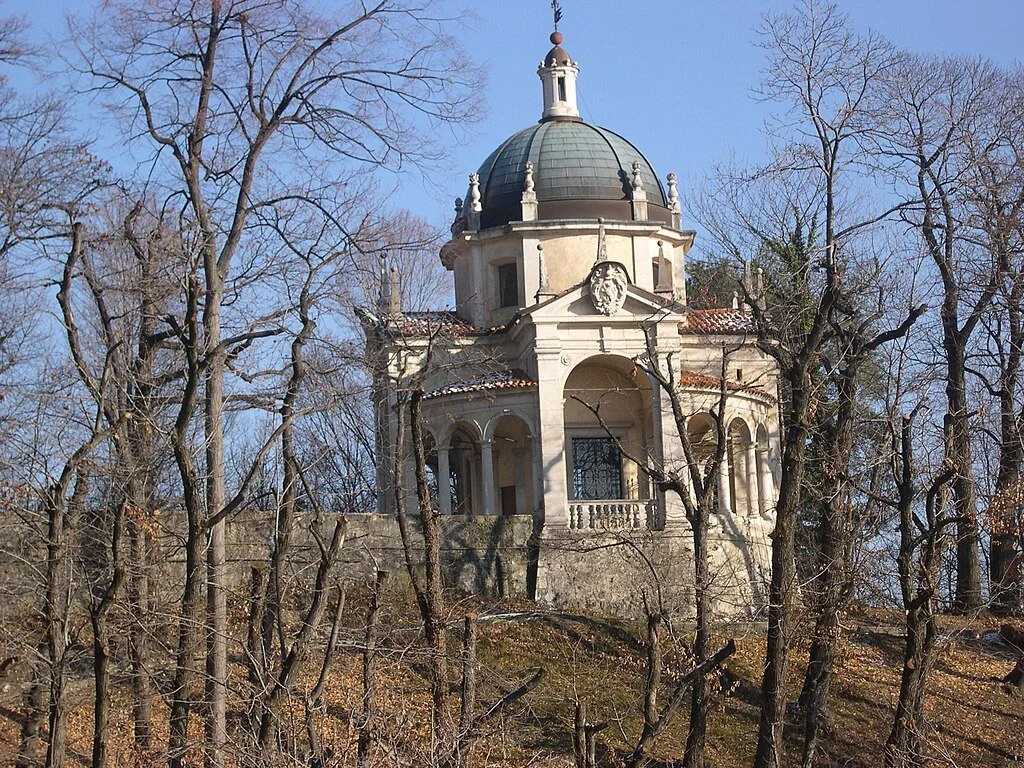
Sacred Mounts
The Sacred Mounts are groups of chapels and other architectural complexes erected on high ground, between the end of the sixteenth and the beginning of the seventeenth centuries, intended for pilgrimage or other aspects of the life of the Catholic faith. The Sacred Mounts of Lombardy, together with those of Piedmont, constitute a serial site included by UNESCO in the list of World Heritage Sites in 2003. They are a splendid example of the integration of architectural elements into the surrounding landscapes, scattered with hills, forests, and lakes; they also contain a remarkable artistic heritage in the form of sculpture and frescoes".