
UNESCO SITES
The Marche region boasts two Unesco Creative Cities and the historic center of Urbino, recognized as a UNESCO World Heritage Site.
-
![Photo by [Marian Luzi] — [• Unsplash]](https://images.squarespace-cdn.com/content/v1/6249e81f18357d21cff3ee57/1773581506649-LH496YYPVGDE56ZZ0F3Z/unsplash-image-NI0bY-VvMi8.jpg)
Historic center of Urbino
Urbino, one of the most important centers of the Italian Renaissance, still retains its artistic charm and architectural heritage. Adorned with sandstone buildings and surrounded by a long terracotta wall, Urbino is a city of immense historical and artistic richness. In 1998, Urbino earned the honor of entering the UNESCO World Heritage List for being a point of attraction for the most illustrious Renaissance scholars and artists from all over Italy and the world, and for having influenced cultural progress in the rest of Europe, managing to keep its exceptional urban complex almost intact.
-
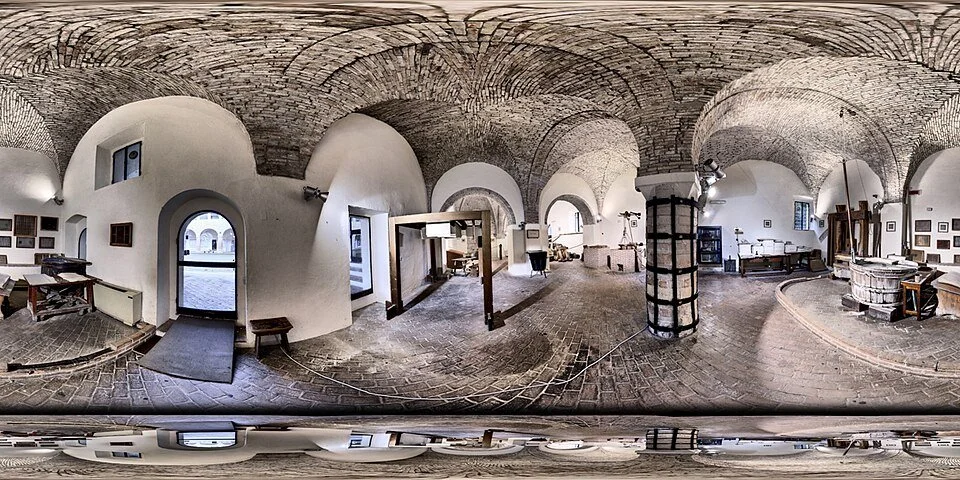
Fabriano
It’s known for its paper manufacturing industry and for watermarking, an invention introduced by master paper makers of Fabriano during the second half of the 13th century and boasting an invaluable artistic and cultural heritage passed on to the present day. UNESCO has included it in the list of Creative Cities because it has been able to make inventiveness and art the beating heart of its economic development. The history of Fabriano, after all, is inseparable from that of paper: here, the master papermakers made some of the finest sheets in the world. Retrace this centuries-old tradition at the Museum of Paper and Watermark, next to the Margherita Gardens, to discover everything about looms, fibers, felts, but also rare banknotes and papers made from the most unusual raw materials.
-
![Photo by [Paola F] — [• Unsplash]](https://images.squarespace-cdn.com/content/v1/6249e81f18357d21cff3ee57/1773582026629-RLMVUOTMPGU8Y0SXD595/unsplash-image-qbr_J2IFbHw.jpg)
Pesaro
In 2017, it was recognised by UNESCO as a Creative City for Music, for the promotion and revival of Rossini's music, having been the birthplace of the famous composer Gioachino Rossini, who was born in Pesaro in 1792. It is famous for its musical tradition, the Conservatory, and the Rossini Opera Festival. Buildings of religious architecture include: the Cathedral, erected on the remains of a late Roman building, which boasts an interesting mosaic heritage; the Church of Sant'Agostino, which preserves a remarkable Gothic-Venetian portal on the façade and important paintings inside; the Sanctuary of the Madonna delle Grazie, built in the 13th century by the Malatesta family and rebuilt in Baroque style.